
The Culprit Behind AI's Shutdown? The "daos.fun Bubble" Behind AICC's Plummet

As a project that promotes a "VC-free Investment DAO Platform," daos.fun instead staged a weekend drama of "VC Coins."
On January 11, Aiccelerate DAO's native token AICC, supported by ai16z co-founder Shaw, Virtuals Protocol contributor #001 Ethermage, and Story co-founder Jason as advisors, was officially launched for trading. After the launch, AICC's market value briefly surpassed $3 billion. However, this momentary highlight was soon shattered by a frenzy of sell-offs. Whale dumping caused a significant drop in market value, sparking strong dissatisfaction in the market.
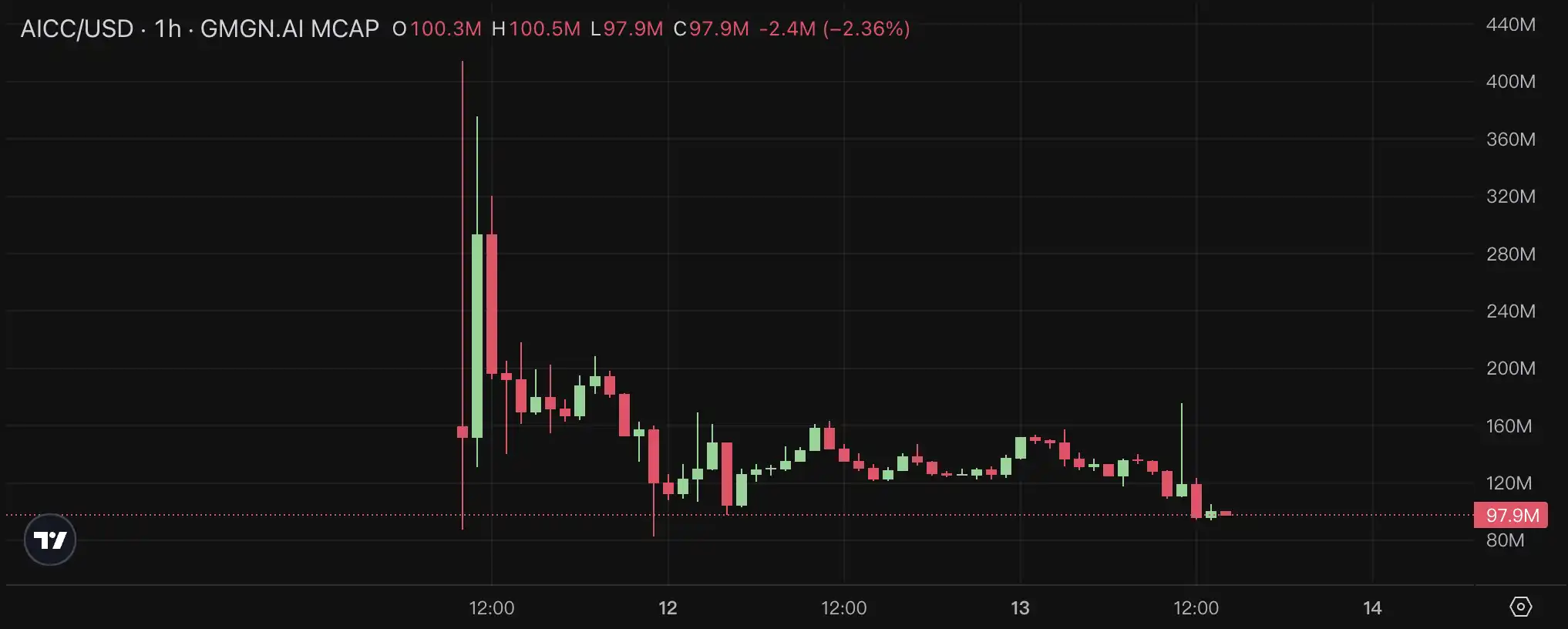
Immediate Sell-Off upon Launch Sparks Outrage
The hype around Aiccelerate DAO started a week ago, with the official announcement that users interested in becoming partners and participating in the presale could express their interest and how they could help the project through actions such as retweeting, liking, and commenting on tweets. Aiccelerate DAO would then select suitable partners for the presale based on user participation and expected contribution.
Using the daos.fun platform, Aiccelerate DAO distributed tokens to 250 KOLs, with each receiving an allocation of 0.5 SOL. These tokens instantly turned into $250,000 to $400,000 each upon launch. Additionally, the project's advisory group could donate stakes capped at 5 SOL.
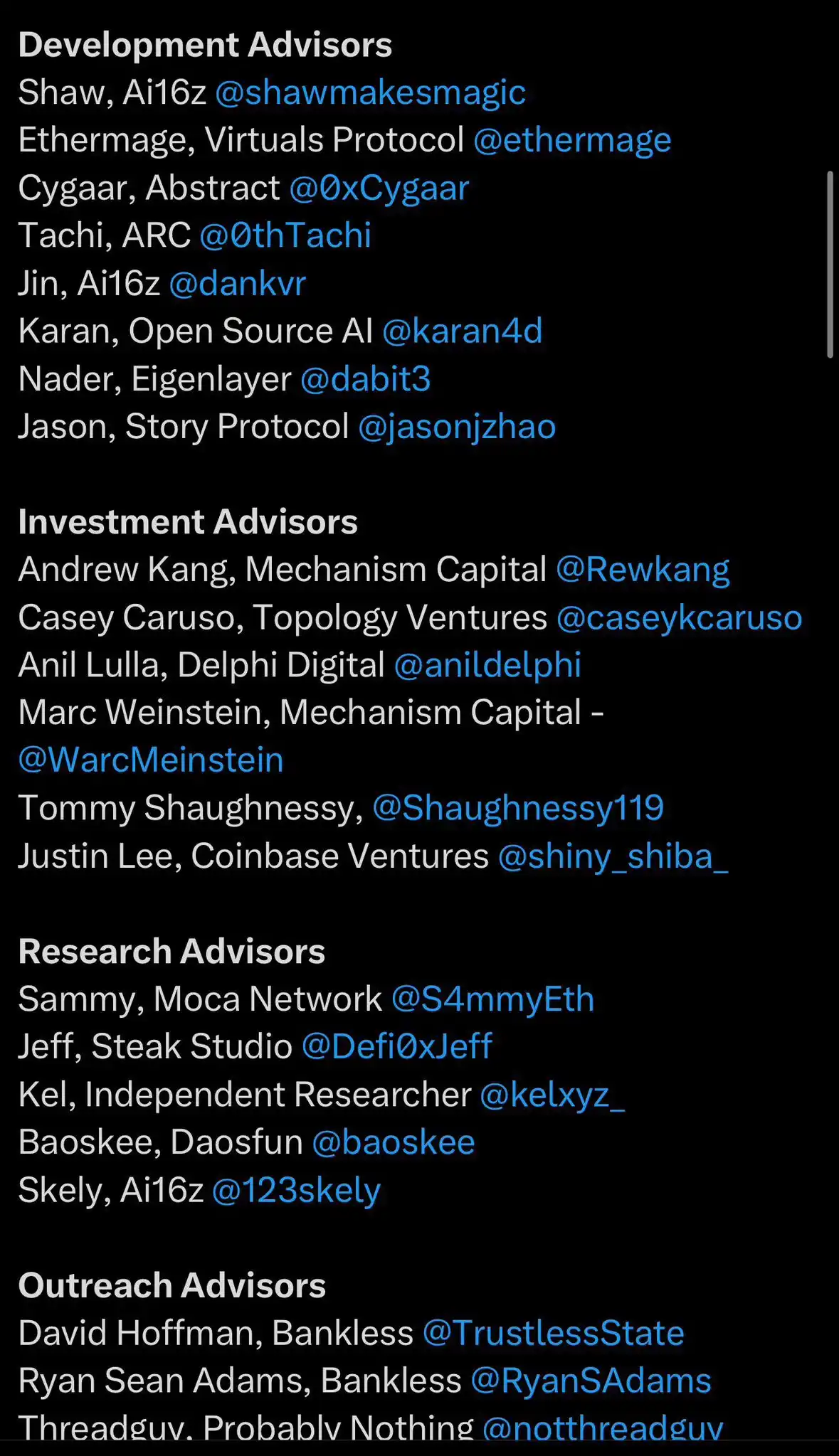
However, these whitelisted users not only failed to fulfill their commitment to supporting the project's development but also chose to immediately sell for profit upon launch. This not only caused a drastic drop in AICC's market value but also had a blood-sucking impact on other AI concept tokens on the chain.
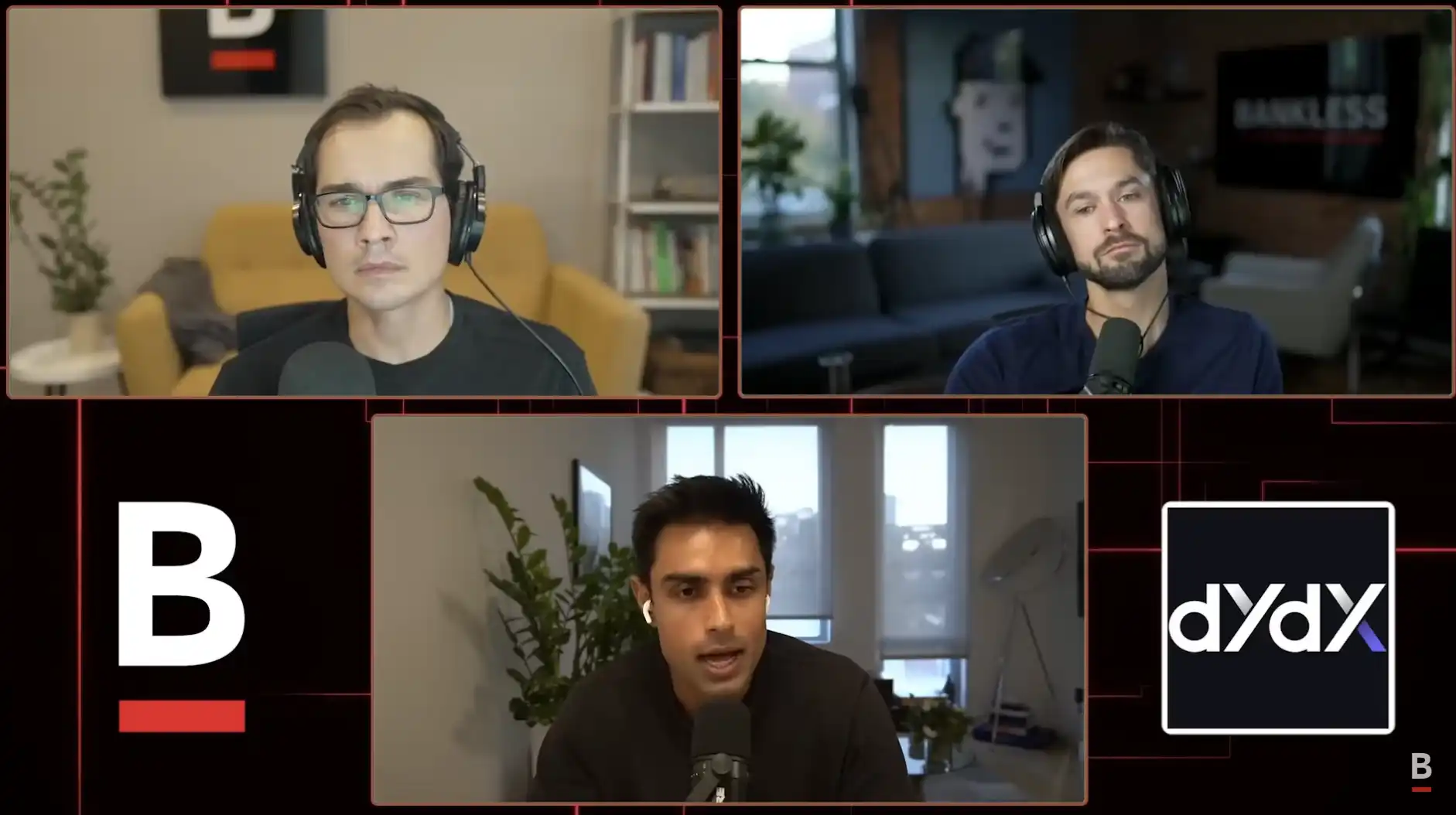
In this "Crypto+AI" race track KOL gathering, the most criticized behavior was from the crypto podcast Bankless with a significant holding and its VC arm, Bankless Ventures, regarding their sell-off actions post AICC launch.
The Rollup founder Andy tweeted that Bankless Ventures was selling tokens through a publicly associated wallet with their X account. "They are promoting this project on YouTube with the co-founder while selling on the day of launch."
Reportedly, Bankless's two hosts each invested 5 SOL, Ben Lakoff managing Bankless Ventures invested 2 SOL under Ventures, and personally invested 5 SOL.
The founder of Aiccelerate DAO, Ejaaz, previously served as a product manager at Coinbase. In November last year, Ejaaz began making frequent appearances on the Bankless podcast to discuss AI+Crypto.
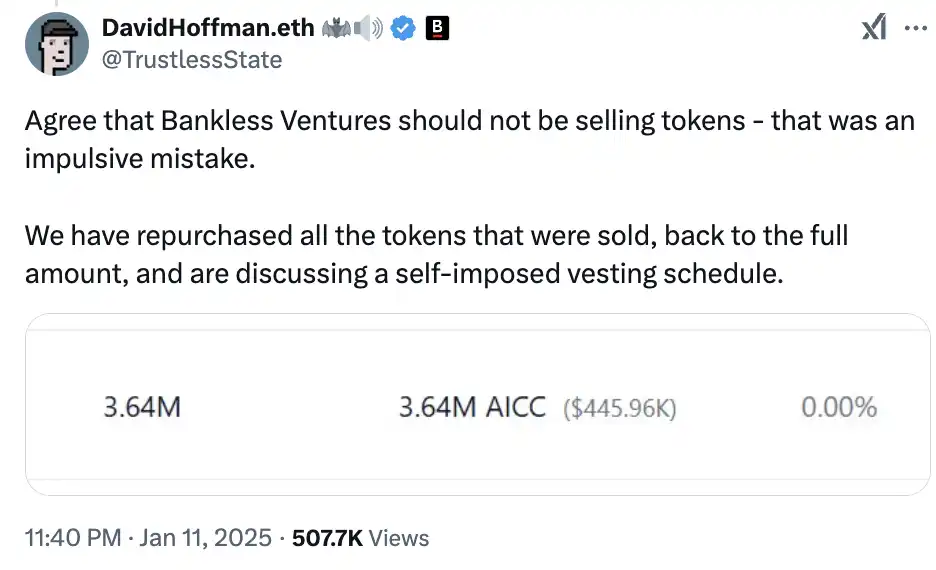
Following Andy's tweet, Bankless co-founder David responded by stating that they had initiated a buyback of the AICC shares sold by Bankless Ventures, referring to it as "an impulsive mistake."
However, Bankless's brand image took a significant hit, with members of the community mentioning Bankless's show sponsor, accusing them of being an accomplice to fraud.
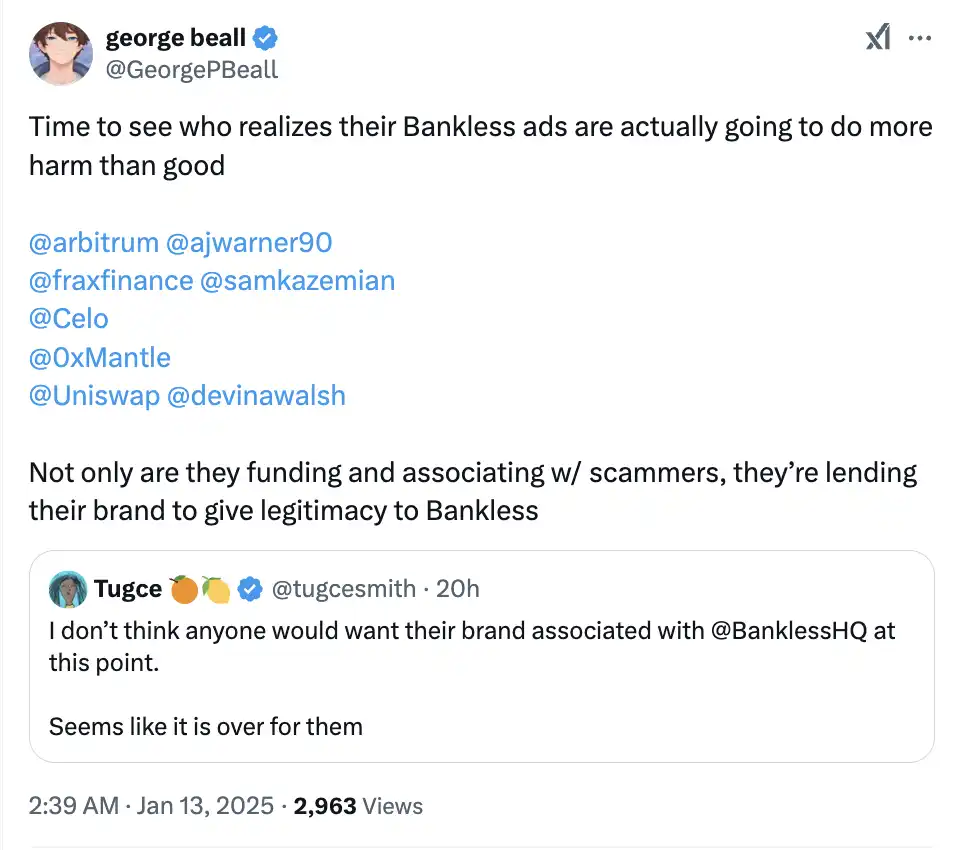
In the latest Bankless Discord channel, Bankless co-founder Ryan responded, stating that both he and David were completely unaware of the token sale and that it was carried out by Ben Lakoff, who lacked an understanding of Aiccelerate DAO's background, for the purpose of profit-taking.
Will the market still support daos.fun?
Amidst this labyrinthine token dump, daos.fun's whitelist mechanism has been a focal point of market attention. It is not a casual endorsement in the project's comment section that grants whitelist access; typically, only Key Opinion Leaders (KOLs) with a large following and community base receive whitelist status to advocate for the project.
daos.fun is another standout asset launch following pump.fun; however, daos.fun is a fund launchpad where the "fund" launched through daos.fun will operate in the form of a DAO and issue corresponding DAO tokens.
A select few creators with an invitation code can set fundraising goals, fund expiration, and management fees. Additionally, daos.fun's fundraising process introduces whitelist rules, where the team selectively distributes fundraising participation eligibility to users based on community engagement through their social accounts to establish a certain level of social reputation and ethical constraints.
However, AICC, with its large and luxurious KOL lineup and a chart that saw a significant sell-off after a strong initial listing, has challenged the ethical lock-up mechanism of daos.fun. On one hand, the project initiating the investment DAO did not have clear whitelist criteria, and on the other hand, users who acquired tokens at a low price during the fundraising phase are not immune to selling off quickly as the project gains traction.
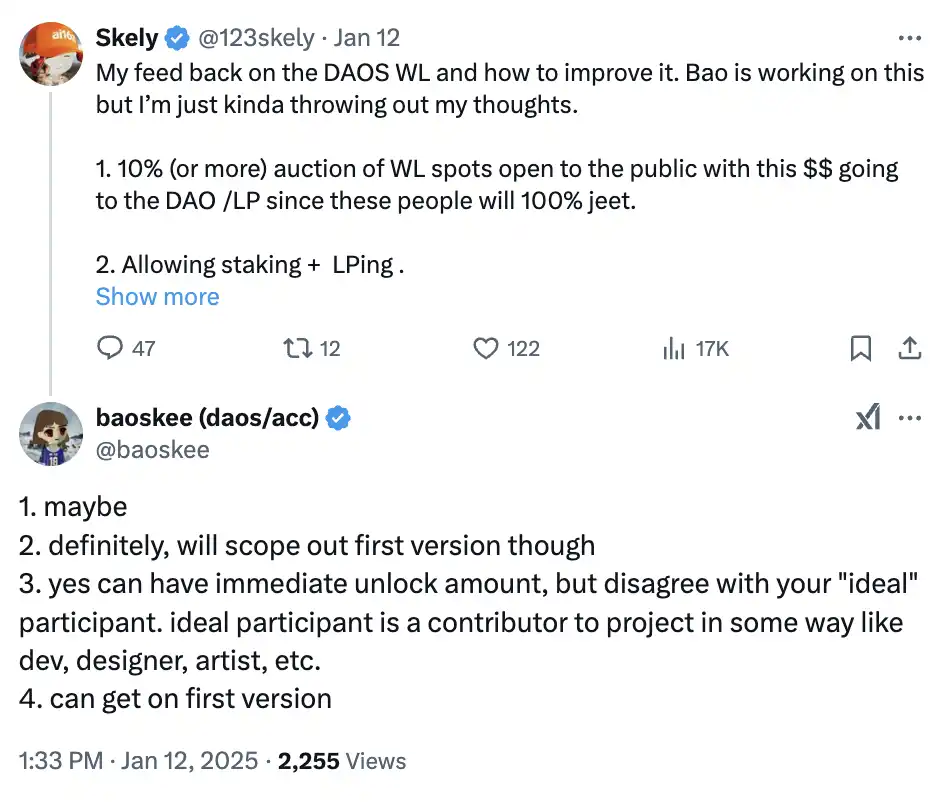
The crypto Key Opinion Leader (KOL) Skely believes the ideal whitelist participant should be someone who 「sells at the peak and buys at the dip, stabilizes the price by providing a large amount of liquidity, is willing to take risks, and injects their SOL funds and tokens into the liquidity pool together.」 However, obviously, this is not behavior that a purely profit-driven individual would choose.
Skely believes that the current whitelist mechanism of daos.fun can be improved through the following suggestions, such as: allocating 10% (or more) of the whitelist slots through public auction to the public, with the auction proceeds used for the DAO or liquidity pool (LP) since these individuals typically tend to quickly cash out. Allowing staking and liquidity provision. And allowing whitelist users to sell to a certain extent, but with transparent rules in place to set buyer expectations while avoiding full-scale dumping.
The founder of daos.fun, baoskee, responded that all of these suggestions are feasible.
Meanwhile, the community also criticized AICC, which launched with a high valuation even before having a product, following the same script that led to the backlash against VC coins in the past – where pricing power is in the hands of the project team, packaging it in the market to sell it back to retail investors. Whether it is a core player donating 5 SOL or a KOL receiving a 0.5 SOL share through 「sweet talk,」 under the current token issuance model, any process of 「presale + whitelist + immediate trading upon listing」 is challenging to rid of speculators entirely.
Peeling off the glamorous façade, 「Crypto+AI」 still requires sufficient product support and real-world use cases to establish a foothold in the current fiercely competitive market. Instead of being labeled as a 「AI concept stock」 bubble, it is better to allow users to truly experience the project's technical depth and practical long-term planning. This is also the only way for investors to return to rationality and reject 「VC coins.」
You may also like

Why is a16z Crypto raising another $2.2 billion to heavily invest in Web3?

Polymarket Underlying Algorithm Explained

What do projects born in the crypto bear market do?

a16z founder's Stanford lecture: Whenever Wall Street and Silicon Valley have different ideas, it's Wall Street that ends up being wrong

Michael Saylor: After three consecutive quarters of losses, Strategy will sell Bitcoin to pay dividends

The toll station at Hormuz and the RMB that cannot be bought

Interview with Coinbase Institutional's Strategic Head: The Institutionalization of Crypto Reaches a Critical Point

Dialogue with Agora CEO Nick: The battle for stablecoin licenses has just begun

Morning Report | a16z Crypto completes $2.2 billion fundraising for its fifth fund; Bullish invests $4.2 billion to acquire share transfer agency Equiniti; PayPal's Q1 performance exceeds expectations

a16z Crypto: What We See Behind the $2.2 Billion New Fund
Web3 is dead, Web2+3 should rise
Stablecoins and Latin American Remittances: The Misunderstood $174 Billion Market

The arrival of the Web 3.0 era: A review of Hong Kong court rulings on digital assets

Track Markets At a Glance: New WEEX Price Widgets for iOS & Android
To streamline your market data access, WEEX has officially launched "Market Watchlist" desktop widgets

The billion-dollar lesson: The focus of DeFi security is shifting from code to operational governance
A Brief Analysis of Stablecoin Licenses and On-Chain Funding
BVNK Founder: Three Stages of Stablecoin Development
The truth about Trump's son's Bitcoin game: he made a staggering $100 million while retail investors lost $500 million
Why is a16z Crypto raising another $2.2 billion to heavily invest in Web3?
Polymarket Underlying Algorithm Explained
What do projects born in the crypto bear market do?
a16z founder's Stanford lecture: Whenever Wall Street and Silicon Valley have different ideas, it's Wall Street that ends up being wrong
Michael Saylor: After three consecutive quarters of losses, Strategy will sell Bitcoin to pay dividends
The toll station at Hormuz and the RMB that cannot be bought


